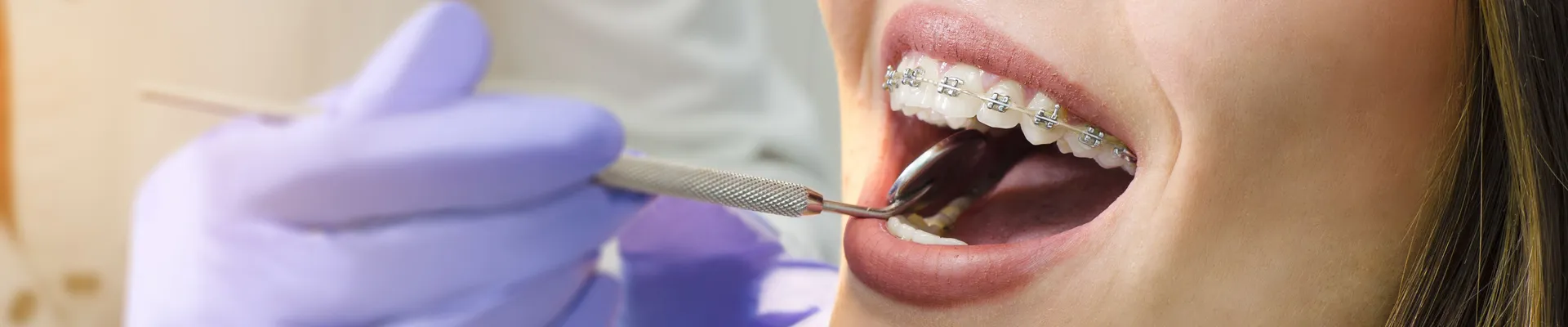
Early Orthodontic Treatment in Bristol, CT
Early orthodontic treatment at Henderson & Goslee Family Dentistry supports healthy jaw growth and proper tooth alignment for children. This approach, often called interceptive orthodontics or Phase 1 care, focuses on guiding development while the face and jaws are still growing. The goal is to make later care simpler, shorter, and more predictable.

Early Orthodontic Treatment Explained
What is early orthodontic treatment in Bristol, Connecticut? It is a preventive and corrective strategy used in childhood to influence jaw width, create room for incoming teeth, and correct certain bite problems before they become more complex. The American Association of Orthodontists® recommends a first orthodontic evaluation by age 7, when permanent molars and incisors usually begin to erupt. At this stage, our dentist can spot crowding, crossbites, open bites, overbites, and habits like prolonged thumb sucking that may affect growth.
Not every child needs Phase 1 braces or appliances. Many children benefit from observation with periodic growth checks. When treatment is recommended, common tools include palatal expanders, limited braces on select teeth, space maintainers, and habit appliances. These options can improve function, reduce the risk of trauma to protruding front teeth, and support better outcomes during Phase 2 treatment in the teen years.
Benefits of Early Orthodontic Treatment
- Create space for crowded or impacted teeth to reduce the need for extractions later.
- Guide jaw growth to improve the bite and facial balance.
- Correct crossbites and underbites that can wear down teeth or strain the jaw joints.
- Lower the chance of injury to protruding front teeth.
- Address oral habits early to protect developing teeth and bone.
- Potentially shorten or simplify Phase 2 braces or aligner treatment.
The Early Orthodontic Process
Parents often ask how early orthodontics works. The process is careful and stepwise to match a child’s growth:
- Initial assessment: A thorough exam checks tooth eruption, bite relationships, and jaw development.
- Diagnostic records: Photos, digital X-rays, and impressions or scans map tooth positions and growth patterns.
- Growth-based planning: Some children enter an observation phase with check-ins every 6–12 months.
- Active Phase 1: If needed, appliances such as a palatal expander, space maintainer, or partial braces are used for targeted changes.
- Retention and monitoring: A simple retainer or nighttime appliance helps hold improvements while permanent teeth finish erupting.
- Phase 2 planning: As a teen, comprehensive braces or aligners fine-tune alignment and bite once most adult teeth are present.
Your Child’s Day-To-Day Experience
Most Phase 1 care lasts 6–18 months, depending on the goals. A palatal expander works by applying gentle pressure to the upper jaw seam, encouraging a gradual increase in width. Parents may turn a small key as directed, and the appliance is checked at follow-up visits.
- Comfort and adaptation: Mild soreness is common for a few days after adjustments or new appliances.
- Eating and speech: Softer foods help at first. Speech typically adapts within a week.
- Oral hygiene: Brushing and flossing around braces or appliances is essential to prevent plaque buildup.
- Appointments: Most visits occur every 4–8 weeks to track progress and make small adjustments.
Signs Your Child May Benefit From Early Care
- Early or late loss of baby teeth compared to peers.
- Mouth breathing or chronic thumb sucking past age 4–5.
- Crowded, blocked, or misplaced teeth.
- Crossbite, underbite, or significant overbite.
- Protruding front teeth or frequent trauma to incisors.
- Jaw shifting or clicking with chewing.
Frequently Asked Questions About Early Orthodontic Treatment

Contact Us
We'd Love to Hear From You
255 N. Main St., Bristol, CT 06010
Office Hours